
 EN
EN
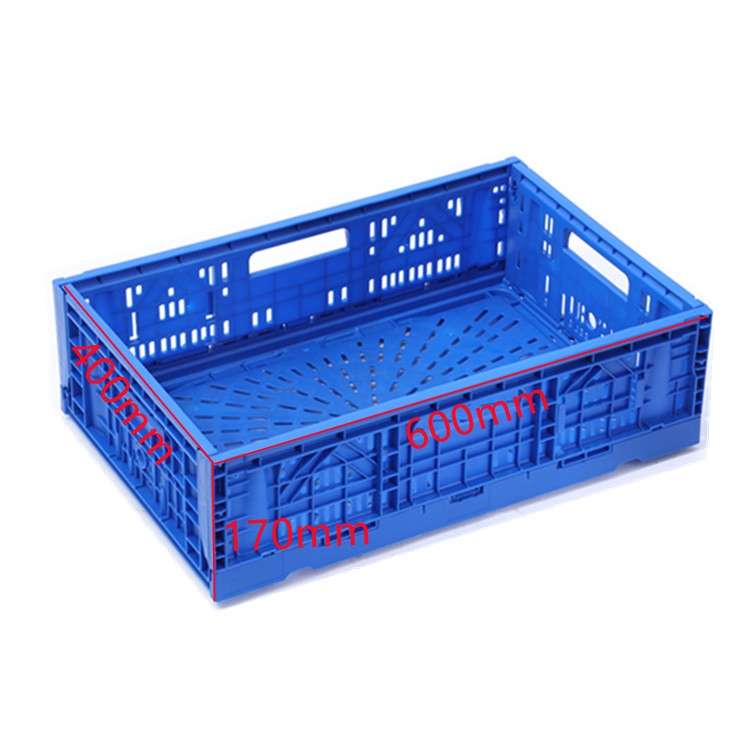
Storage efficiency remains one of the most critical operational challenges in retail, logistics, and manufacturing environments. A folding crate offers a practical solution to address this challenge by dramatically reducing the physical footprint required when containers are not actively in use. Unlike traditional rigid plastic or wooden crates that consume valuable floor and shelf space even when empty, a folding crate collapses to a fraction of its operational height. This fundamental difference transforms how businesses approach inventory management, warehouse organization, and supply chain logistics across multiple sectors.
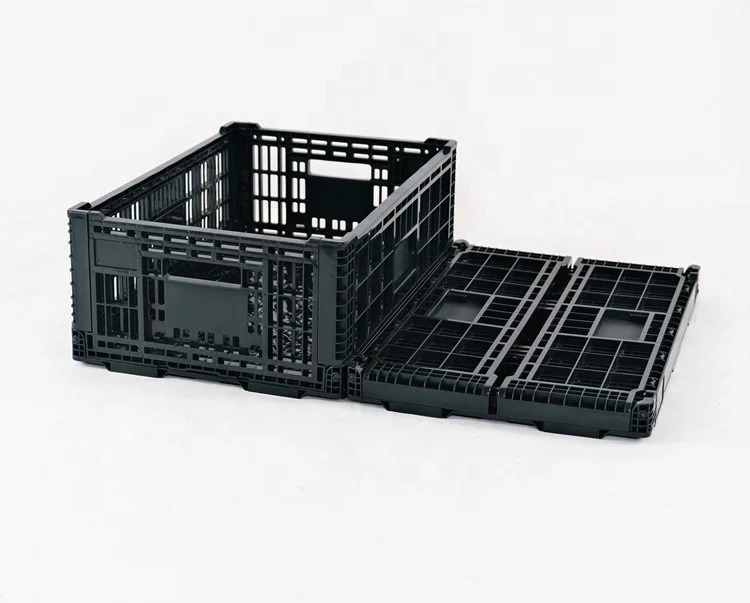
The space-saving advantage of a folding crate extends far beyond simple dimensional reduction. When businesses implement folding crate systems, they unlock measurable improvements in warehouse density, return-trip efficiency, and overall facility utilization. This article explores the concrete ways a folding crate reduces storage requirements, the operational contexts where these containers deliver maximum value, and the practical considerations for integrating them into existing logistics workflows.
How Folding Crates Dramatically Reduce Physical Footprint
Collapse Ratio and Space Recovery
A standard folding crate typically measures between 600–800mm in length, 400–600mm in width, and 300–400mm in height when fully assembled. Once collapsed, the same folding crate reduces to approximately 50–65mm in height, meaning a single container requires roughly one-tenth the vertical space. For a facility storing 500 empty containers, traditional rigid alternatives demand approximately 200–250 cubic meters of dedicated storage. The equivalent quantity of folding crate units requires only 20–25 cubic meters. This 90% reduction in cubic volume translates directly into liberated warehouse square footage that can support additional inventory, processing zones, or operational workflows.
Stacking Efficiency and Load Density
When a folding crate is nested in its collapsed state, multiple units stack vertically with minimal wasted air space. A folding crate designed for agriculture or retail typically permits 30–50 collapsed units per stacking column without structural compromise. This density advantage means a single wooden pallet can accommodate 40–60 collapsed folding crate units, compared to 8–12 fully rigid containers occupying equivalent floor space. For return logistics networks, where empty containers flow back to distribution centers, this nesting efficiency reduces transportation trips, fuel consumption, and associated carbon footprint. A folding crate system therefore delivers both immediate facility space savings and downstream supply chain efficiency gains.
Operational Contexts Where Folding Crate Space Savings Matter Most
Retail and Fresh Produce Supply Chains
Retailers operating produce departments face unique storage pressures. Fresh products require frequent inventory rotation, high-velocity throughput, and reliable container systems that maintain product integrity while minimizing backroom congestion. A folding crate addresses this operational reality by collapsing immediately after goods reach store shelves, freeing critical backroom square footage during high-demand periods. Many supermarket chains report 25–35% reductions in storage area requirements after transitioning from rigid containers to folding crate alternatives. The folding crate enables compact storage of empty containers in minimal space, reducing the need for dedicated container holding zones that traditionally occupy 200–400 square meters in large retail facilities.
Third-Party Logistics and Distribution Networks
Third-party logistics providers (3PLs) operate under margin pressure where facility rent represents a significant operational cost. For these operators, folding crate systems deliver compelling financial returns. A 3PL managing return logistics for an e-commerce fulfillment network might process 5,000–10,000 empty containers daily. Traditional rigid containers require permanent warehouse space for temporary storage during sorting and redistribution cycles. A folding crate collapses after unloading, reducing the temporary holding area from 500 square meters to 50 square meters. Over a year, this space reduction directly lowers facility overhead, enabling margin improvement or competitive pricing advantages that strengthen customer retention.
Manufacturing and Assembly Operations
Manufacturers using parts containers throughout production lines recognize that empty containers still consume valuable floor space adjacent to assembly stations. A folding crate addresses this constraint by enabling workers to collapse containers immediately after parts removal, storing dozens of empty units in a small staging area. This practice prevents floor clutter, improves walkway safety, and maintains lean manufacturing principles by eliminating non-value-adding physical waste. Advanced manufacturers report that implementing folding crate systems allows 30–40% reductions in container storage footprint without compromising parts availability or workflow speed.
Practical Implementation Considerations for Maximum Space Recovery
Integration with Existing Warehouse Systems
Transitioning to a folding crate system requires alignment with existing warehouse infrastructure, inventory tracking systems, and material handling workflows. Organizations must assess whether current racking systems accommodate collapsed folding crate storage, whether barcode scanning protocols track container status through collapse and redeployment cycles, and whether worker training addresses proper collapse techniques that maintain long-term durability. A folding crate integrated poorly into existing workflows may fail to realize expected space savings if employees lack clear procedures for timely collapse and organized storage. Successful implementations establish dedicated collapse stations, define collapse triggers in work procedures, and verify that folding crate storage locations remain easily accessible for rapid retrieval when operational needs demand rapid container redeployment.
Durability and Lifecycle Considerations
A folding crate constructed from high-grade polypropylene or reinforced plastic typically withstands 100–200 collapse cycles before structural degradation reduces reliability. Organizations must calculate expected usage cycles based on operational velocity to ensure folding crate lifespan aligns with budget cycles. For high-velocity environments processing 20–40 collapse cycles daily, a folding crate may require replacement annually. Lower-velocity operations might achieve 3–5 year service life from the same equipment. Understanding this relationship enables accurate total-cost-of-ownership modeling that compares folding crate systems against traditional rigid alternatives. Many organizations discover that despite higher unit acquisition costs, the combined benefit of space savings, transportation efficiency, and operational flexibility makes folding crate adoption financially justified within 18–24 months.
FAQ
What is the typical height reduction when a folding crate collapses?
A standard folding crate reduces from 300–400mm in height to approximately 50–65mm when fully collapsed. This represents roughly an 85–90% reduction in vertical dimension, enabling dramatic space recovery in warehouses and storage facilities. The exact reduction ratio depends on specific folding crate design, material thickness, and hinge engineering.
Can a folding crate reduce transportation costs alongside storage space savings?
Yes, a folding crate improves transportation efficiency significantly. When empty containers are returned through reverse logistics networks, the nesting capability of a collapsed folding crate permits 5–8 times more units per truck compared to rigid containers. This density improvement reduces transportation trips, fuel consumption, and distribution costs while simultaneously supporting sustainability objectives through lower carbon emissions per container cycle.
Are folding crates suitable for all product types and industries?
A folding crate performs excellently in retail, produce, automotive parts, pharmaceuticals, and consumer goods environments where moderate to high product velocity supports frequent container turnover. Industries requiring extreme temperature control, hazardous material containment, or specialized nesting patterns may encounter limitations with standard folding crate designs. Evaluating specific product compatibility, regulatory requirements, and operational workflows ensures the selected folding crate system delivers expected space and efficiency benefits.