
 EN
EN
When goods move through agricultural supply chains or industrial logistics networks, the container holding them is far more than a simple vessel. A plastic crate has become one of the most widely adopted solutions for protecting products during transit, storage, and handling across both sectors. The question is not merely whether these containers offer some level of protection — it is whether they can genuinely improve protection outcomes compared to traditional alternatives, and under what conditions that improvement is most meaningful.
The short answer is yes — a plastic crate can meaningfully improve product protection in both agricultural and industrial transport systems, but the degree of improvement depends on design specifications, load characteristics, and how the crate is integrated into the broader logistics workflow. Understanding the mechanisms behind that protection, and the conditions that maximize it, is essential for procurement managers, logistics planners, and operations teams making container decisions at scale.
How a Plastic Crate Addresses the Core Risks in Agricultural Transport
Physical Impact and Compression Damage
Fresh produce, harvested crops, and packaged agricultural goods are highly vulnerable to physical damage during transport. Vibration, sudden braking, stacking pressure, and rough road surfaces all contribute to bruising, crushing, and structural breakdown of products. A well-engineered plastic crate provides a rigid outer shell that absorbs and distributes these mechanical forces rather than transferring them directly to the contents.
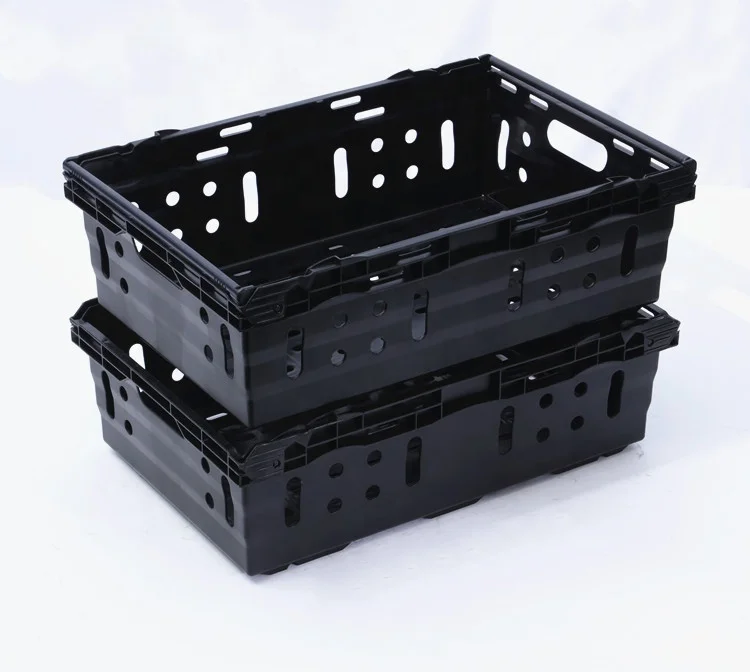
The structural integrity of a plastic crate under stacking loads is particularly important in agricultural logistics, where containers are routinely stacked four to six units high in cold storage facilities and transport vehicles. High-density polyethylene and polypropylene formulations used in quality plastic crate manufacturing maintain their shape under sustained compressive loads, preventing the collapse that can occur with cardboard or lower-grade containers.
Reinforced corner posts and ribbed sidewall designs further distribute load stress across the entire body of the plastic crate rather than concentrating it at weak points. This engineering detail directly reduces the incidence of product damage caused by container deformation during multi-tier stacking operations.
Ventilation and Temperature-Sensitive Cargo
One of the most significant protection advantages a plastic crate offers in agricultural transport is its ability to support airflow around perishable goods. Mesh or perforated sidewall designs allow cold air to circulate freely through stacked units, maintaining consistent temperature distribution throughout a refrigerated load. This is critical for fruits, vegetables, and other temperature-sensitive commodities where even localized heat buildup can accelerate spoilage.
Unlike solid-walled containers, a ventilated plastic crate does not trap ethylene gas emitted by ripening produce. Ethylene accumulation within a sealed container accelerates the ripening process and shortens shelf life, which translates directly into increased waste and reduced product value at the point of sale. Ventilated plastic crate designs mitigate this risk by allowing gas exchange throughout the storage and transit period.
The combination of structural rigidity and ventilation makes the plastic crate particularly well-suited to cold chain logistics, where product protection is inseparable from temperature management. Procurement teams sourcing containers for fresh produce operations should treat ventilation geometry as a primary specification criterion, not a secondary feature.
Protection Performance of a Plastic Crate in Industrial Transport Systems
Resistance to Contamination and Chemical Exposure
Industrial transport environments expose containers to a range of contaminants including oils, cleaning agents, hydraulic fluids, and process chemicals. A plastic crate manufactured from chemically resistant polymers maintains its structural and surface integrity in these conditions, whereas wooden or metal alternatives may absorb contaminants, corrode, or degrade in ways that compromise both the container and the goods it carries.
For industries handling components, assemblies, or finished goods that must arrive clean and undamaged, the non-porous surface of a plastic crate is a direct protection asset. It does not harbor bacteria, mold, or residual chemicals between uses, and it can be cleaned and sanitized without the surface degradation that affects alternative materials over time.
This contamination resistance also supports compliance with hygiene standards in food-adjacent industrial operations, pharmaceutical logistics, and electronics manufacturing environments where particulate contamination is a quality concern. The plastic crate in these contexts is not just a transport container — it is part of the product protection and quality assurance system.
Dimensional Consistency and Handling Precision
Industrial logistics systems increasingly rely on automated handling equipment, conveyor systems, and robotic picking operations. These systems require containers with precise, consistent external dimensions to function reliably. A plastic crate produced through injection molding or blow molding processes delivers dimensional consistency that wooden crates and folded cardboard containers cannot match.
When a plastic crate fits precisely within a pallet footprint, slots correctly into racking systems, and interfaces reliably with automated handling equipment, the risk of mishandling-related product damage drops significantly. Containers that shift, tilt, or jam in automated systems create both product damage events and operational downtime — costs that are often attributed to handling errors rather than container specification failures.
Standardized plastic crate dimensions also simplify load planning, reduce wasted space in transport vehicles, and support more predictable weight distribution across pallets and shelving systems. These operational benefits compound the direct product protection advantages of the container itself.
Durability and Long-Term Protection Consistency
Performance Across Multiple Use Cycles
A key distinction between a plastic crate and single-use or limited-use alternatives is its ability to maintain protection performance across hundreds or thousands of use cycles. Cardboard degrades with moisture exposure, wooden containers develop splinters and structural weaknesses, and metal containers are prone to corrosion and denting. A quality plastic crate retains its protective geometry and surface integrity through repeated use, cleaning, and exposure to varied environmental conditions.
This durability directly affects protection consistency. A container that performs well on its first use but degrades over subsequent cycles introduces variability into the protection system. Operations that rely on consistent protection outcomes — particularly those with quality management systems or customer service level agreements — benefit from the predictable long-term performance of a plastic crate.
The total cost of protection per unit transported also improves significantly when container lifespan is factored into the calculation. A plastic crate that remains serviceable for five to ten years of regular use distributes its acquisition cost across a far larger number of transport cycles than disposable alternatives, making it both a protection investment and a cost efficiency measure.
UV Resistance and Outdoor Storage Conditions
Agricultural operations frequently involve outdoor storage, field-side staging, and transport in open vehicles where containers are exposed to direct sunlight and weather. UV-stabilized plastic crate formulations resist the photodegradation that causes untreated polymers to become brittle and structurally compromised over time. This matters because a container that has lost structural integrity due to UV exposure cannot reliably protect its contents under stacking or impact loads.
Buyers specifying plastic crate products for outdoor agricultural use should confirm UV stabilization as a material specification, not assume it is standard across all products. The difference between a UV-stabilized and non-stabilized plastic crate becomes apparent within one to two seasons of outdoor use, and the protection implications are significant for operations that depend on container performance year-round.
Integration Factors That Determine Protection Outcomes
Matching Crate Specification to Load Characteristics
A plastic crate improves product protection most effectively when its specification is matched to the specific load it will carry. Wall thickness, base reinforcement, ventilation percentage, and internal volume all affect how well the container protects different product types. A plastic crate designed for heavy root vegetables will have different structural requirements than one intended for fragile soft fruits or precision-machined industrial components.
Procurement teams that treat all plastic crate products as interchangeable commodities often underperform on protection outcomes because they are using containers optimized for different load profiles. Engaging with technical specifications — particularly load rating, stacking strength, and internal dimension tolerances — is essential for matching the plastic crate to the protection requirement.
In industrial applications, the addition of foam inserts, dividers, or anti-static liners within a plastic crate can extend its protection capability to fragile or sensitive components without requiring a different container format. This modularity makes the plastic crate a flexible platform for protection system design rather than a fixed solution.
System-Level Considerations in Transport Network Design
The protection a plastic crate provides is also influenced by how it is used within the broader transport system. Consistent loading practices, appropriate stacking configurations, and correct vehicle loading patterns all affect whether the container's protection capabilities are fully realized. A high-specification plastic crate loaded incorrectly or stacked beyond its rated capacity will not deliver the protection its design intends.
Training for warehouse and logistics staff on correct plastic crate handling, stacking limits, and inspection protocols is therefore part of the protection system, not separate from it. Organizations that invest in container quality but neglect handling standards often see protection outcomes that do not reflect the capability of the plastic crate itself.
Return logistics and container maintenance programs also affect long-term protection performance. A plastic crate that is regularly inspected, cleaned, and retired when structurally compromised maintains consistent protection standards across the fleet. Ad hoc container management, by contrast, introduces damaged units into the system that create unpredictable protection failures.
FAQ
Can a plastic crate protect fragile produce better than cardboard packaging during long-distance transport?
Yes, in most long-distance transport scenarios a plastic crate outperforms cardboard for fragile produce protection. Its rigid structure resists deformation under stacking loads, it does not weaken with moisture exposure, and its consistent geometry prevents the shifting and compression that causes bruising in cardboard-packed shipments. The key is selecting a plastic crate with appropriate internal dimensions and ventilation for the specific produce type being transported.
Is a plastic crate suitable for transporting industrial components that require contamination control?
A plastic crate is well-suited to contamination-sensitive industrial transport when manufactured from appropriate polymer grades and maintained under a proper cleaning protocol. Its non-porous surface does not absorb oils, chemicals, or biological contaminants, and it can be sanitized repeatedly without surface degradation. For highly sensitive applications, internal liners or dividers can be added to the plastic crate to provide additional contamination barriers.
How does the stacking strength of a plastic crate compare to wooden alternatives in warehouse storage?
A quality plastic crate typically offers more consistent and predictable stacking strength than wooden alternatives because its structural properties do not vary with moisture content, grain direction, or joint integrity. Wooden containers can develop structural weaknesses over time as joints loosen and wood absorbs moisture, whereas a plastic crate maintains its rated stacking capacity throughout its service life provided it is not physically damaged or UV-degraded.
What specifications should be prioritized when selecting a plastic crate for cold chain agricultural logistics?
For cold chain agricultural logistics, the most important specifications are ventilation percentage of sidewall area, stacking strength at low temperatures, UV stabilization for outdoor staging, and dimensional compatibility with the cold storage racking system. A plastic crate with high ventilation supports airflow and temperature uniformity, while low-temperature stacking strength ensures the container does not become brittle or deform in refrigerated environments. Dimensional standardization reduces handling errors and maximizes cold storage space utilization.
Table of Contents
- How a Plastic Crate Addresses the Core Risks in Agricultural Transport
- Protection Performance of a Plastic Crate in Industrial Transport Systems
- Durability and Long-Term Protection Consistency
- Integration Factors That Determine Protection Outcomes
-
FAQ
- Can a plastic crate protect fragile produce better than cardboard packaging during long-distance transport?
- Is a plastic crate suitable for transporting industrial components that require contamination control?
- How does the stacking strength of a plastic crate compare to wooden alternatives in warehouse storage?
- What specifications should be prioritized when selecting a plastic crate for cold chain agricultural logistics?