
 EN
EN
Distribution centers operate under constant pressure to move products faster, reduce labor costs, and minimize damage during handling. The euro pallet has emerged as a critical solution for achieving these operational goals. Understanding how a euro pallet enhances handling efficiency reveals why thousands of distribution facilities across Europe and globally have standardized on this specific pallet format for their material handling operations.
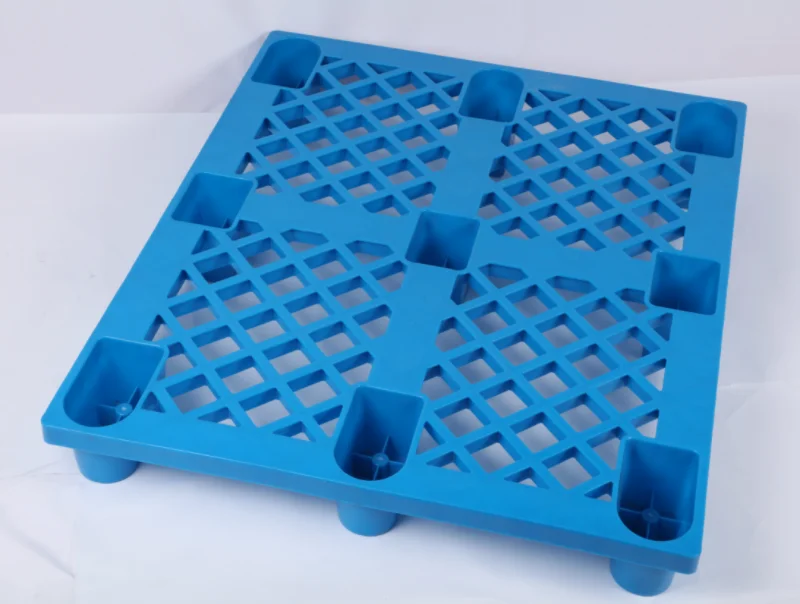
The euro pallet represents a standardized platform that fundamentally transforms how goods move through distribution networks. Measuring 1200 millimeters by 800 millimeters, this precisely engineered euro pallet offers advantages that directly impact warehouse productivity, staff safety, and overall supply chain performance. Distribution managers who implement a euro pallet system experience measurable improvements in throughput and operational efficiency.
Optimized Dimensions and Warehouse Space Management
Standardized Euro Pallet Design Benefits
A euro pallet follows International Organization for Standardization specifications, creating consistency across all handling equipment and storage infrastructure. Every euro pallet adheres to exact dimensional standards, eliminating compatibility issues between warehouses, trucks, and handling equipment. This standardization means that a euro pallet purchased from any manufacturer will fit identically into every racking system, automated conveyor, and vehicle designed for European logistics networks. Distribution centers that use a euro pallet across their entire operation eliminate sorting delays, reduce equipment jams, and cut the time spent repositioning loads.
Space Utilization and Storage Efficiency
The precise dimensions of a euro pallet enable optimal utilization of storage racks, automated systems, and transport vehicles. Distribution centers calculate storage density based on standard euro pallet measurements, allowing warehouses to design efficient shelving systems that minimize wasted vertical and horizontal space. A euro pallet's regulated footprint ensures that every inch of racking space accommodates the pallet without gaps or overhang. Managers can predict exactly how many loads fit into each storage location, improving inventory tracking and reducing the physical space required for operations. This dimensional consistency means that a euro pallet integrates seamlessly with modern automated storage and retrieval systems that depend on predictable pallet dimensions.
Enhanced Material Handling Equipment Compatibility
Forklift and Equipment Performance
Material handling equipment performs optimally when working with a euro pallet because the pallet's standardized dimensions accommodate fork pocket specifications, load beam positioning, and weight distribution requirements designed into modern forklifts and pallet jacks. A euro pallet's structure ensures that forks engage properly, creating balanced load distribution that reduces equipment strain and extends machinery lifespan. Distribution centers report fewer equipment breakdowns when using a euro pallet consistently across their operations. The standardized design eliminates the misalignments and load imbalances that occur when handling non-standard pallets, reducing maintenance costs and downtime.
Automated System Integration
Modern distribution centers increasingly deploy automated sorting, stacking, and movement systems that depend on standardized pallet dimensions. A euro pallet interfaces perfectly with these automated systems because sensors, optical scanners, and mechanical interfaces are calibrated specifically for euro pallet measurements. Facilities using a euro pallet achieve faster throughput because automated equipment requires no adjustment between handling tasks. Conveyor systems, robotic stackers, and automated guided vehicles move a euro pallet through distribution workflows without requiring manual intervention or repositioning. This compatibility translates directly into higher processing speeds, reduced labor requirements, and improved accuracy in order fulfillment operations.
Operational Efficiency and Labor Optimization
Safety and Ergonomic Improvements
The standardized height and load characteristics of a euro pallet enable distribution staff to work more safely and efficiently. Workers understand precisely how a euro pallet will behave when moved, how loads distribute across the pallet structure, and what handling techniques apply universally. A euro pallet's consistent design reduces strain injuries by ensuring that loads position predictably, allowing staff to maintain proper lifting posture and avoid awkward repositioning. Training time decreases because employees learn a single pallet format rather than adapting to multiple non-standard designs. Distribution centers using a euro pallet report lower injury rates and improved worker retention, as staff feel more confident and physically safer during daily handling operations.
Throughput and Processing Speed
Distribution facilities maximize processing speed when equipment operators work with a euro pallet because no time is lost sorting pallets, making adjustments, or clearing incompatibilities between systems. A euro pallet moves through receiving docks, staging areas, storage racks, and shipping zones without delays caused by dimensional variations or equipment misalignment. Staff perform handling tasks faster because they understand exactly how the euro pallet will fit into each location and what actions will execute efficiently. Real-time tracking systems work more accurately with a euro pallet because the consistent dimensions ensure reliable sensor readings and barcode positioning. Distribution centers measure processing improvements of 8 to 15 percent when transitioning from mixed pallet formats to standardized euro pallet operations.
Supply Chain Visibility and Data Accuracy
Tracking and Inventory Management
The standardized euro pallet format enables distribution centers to implement reliable asset tracking systems that would fail with non-standard pallets. Radio frequency identification tags and barcode systems mount consistently on a euro pallet, ensuring that scanning equipment captures data accurately during every handling event. Inventory systems maintain precise location records when a euro pallet passes through predictable warehouse zones with standardized dimensions. Distribution managers gain real-time visibility into stock levels, product locations, and shipment status because the euro pallet's consistent properties allow sensors and scanners to operate reliably without manual adjustments. This data accuracy reduces misshipments, prevents inventory discrepancies, and accelerates order fulfillment cycles.
Cross-Dock Operations and Supply Chain Integration
Cross-dock facilities benefit significantly when all partners in the supply chain use a euro pallet for product transfers. Goods arrive on a euro pallet, move through sortation systems without repositioning, and depart on a euro pallet destined for the next facility. A euro pallet's standardization eliminates the time and labor required to consolidate loads, handle compatibility issues, or stage products differently for different carriers. Retailers, manufacturers, and logistics providers all recognize the euro pallet, reducing negotiations around handling procedures and enabling streamlined operations. Supply chain efficiency improves dramatically because every stakeholder understands how to manage a euro pallet and integrates it seamlessly into their operations.
FAQ
What are the key dimensions of a euro pallet?
A euro pallet measures 1200 millimeters in length and 800 millimeters in width, with a standardized height of 144 millimeters. These precise dimensions conform to international standards and ensure compatibility across all distribution networks using the euro pallet format. The regulated thickness and weight capacity of a euro pallet enable reliable stacking and reliable handling across all warehouse equipment.
How does a euro pallet compare to other pallet formats used in distribution?
A euro pallet's fixed dimensions contrast with non-standard or regional pallet formats that vary in length, width, and height specifications. The standardized euro pallet eliminates compatibility issues, equipment adjustments, and sorting delays that occur when distribution centers handle multiple pallet types. Distribution facilities operating with a euro pallet achieve faster throughput and lower operational costs than facilities managing diverse pallet formats.
Can a euro pallet be recycled or reused in distribution operations?
Yes, a euro pallet is designed for repeated use and typically remains operational for many years through proper maintenance. Distribution centers can refurbish a euro pallet when damage occurs, extending the pallet's service life cost-effectively. The standardized design of a euro pallet supports reverse logistics programs where empty pallets return through the supply chain for reuse, reducing waste and supporting sustainable operations.