
 EN
EN

Modern warehouses and retail stores face increasing pressure to optimize their stock handling operations while maintaining cost-effectiveness and operational efficiency. A plastic trolley has emerged as an indispensable tool that transforms how businesses manage inventory movement, product organization, and customer shopping experiences. These versatile wheeled containers offer remarkable durability, lightweight construction, and adaptability across various commercial environments. From bustling supermarkets to expansive distribution centers, the strategic implementation of plastic trolley systems delivers measurable improvements in productivity, worker safety, and overall operational workflow. Understanding the comprehensive benefits and applications of these innovative storage solutions enables businesses to make informed decisions about enhancing their material handling capabilities.
Enhanced Mobility and Maneuverability in Warehouse Operations
Streamlined Movement Across Different Floor Surfaces
The design excellence of a plastic trolley becomes immediately apparent when navigating diverse warehouse floor conditions. Unlike traditional metal carts that can struggle with uneven surfaces or create excessive noise, plastic trolley units glide smoothly across concrete, epoxy-coated floors, and even slightly textured surfaces. The carefully engineered wheel systems distribute weight evenly, reducing rolling resistance and enabling workers to transport heavy loads with minimal physical strain. This enhanced mobility translates directly into improved productivity as employees can complete restocking tasks more efficiently while experiencing less fatigue throughout their shifts.
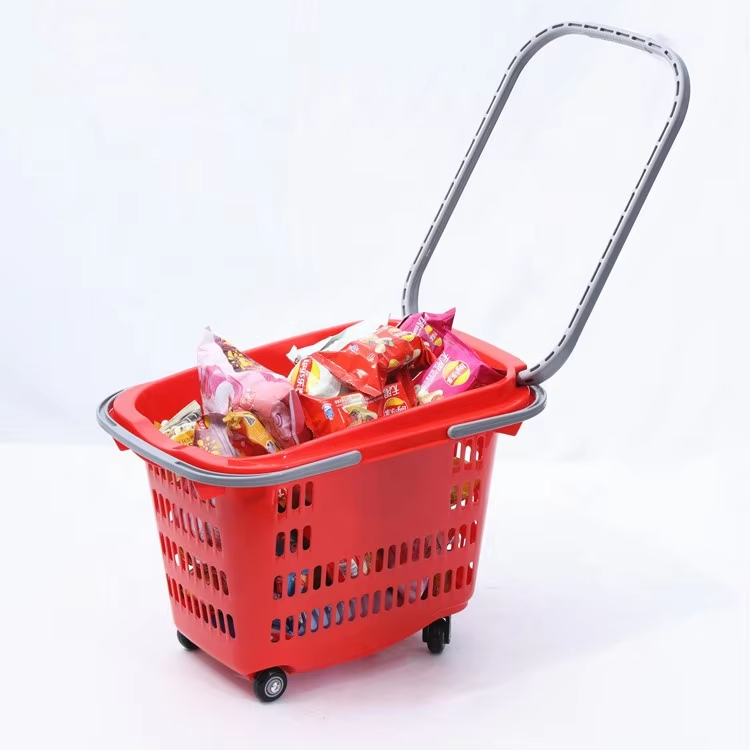
Professional warehouse managers consistently report significant improvements in operational flow when transitioning to plastic trolley systems. The lightweight yet robust construction allows for quick directional changes, tight corner navigation, and precise positioning in narrow aisles. Workers appreciate the ergonomic benefits of smooth-rolling wheels that respond predictably to steering inputs, eliminating the jerky movements common with poorly designed alternatives. These operational advantages compound over time, creating substantial improvements in overall warehouse throughput and employee satisfaction.
Reduced Physical Strain and Improved Worker Safety
Occupational safety represents a critical consideration in modern warehouse operations, and the plastic trolley addresses multiple risk factors simultaneously. The lightweight construction significantly reduces the initial effort required to set loads in motion, protecting workers from repetitive strain injuries associated with heavy lifting and pushing. Smooth-operating wheel assemblies eliminate sudden jolts or unexpected resistance that can cause back injuries or muscle strains during routine material handling tasks.
Ergonomic handle designs on quality plastic trolley models provide comfortable grip positions that accommodate workers of varying heights and physical capabilities. The reduced noise generation compared to metal alternatives creates a more pleasant working environment while enabling better communication between team members. Safety managers particularly value the rounded edges and impact-resistant construction that minimize injury risks in busy warehouse environments where collisions between equipment and personnel can occur.
Versatile Storage Solutions for Retail Environments
Adaptable Configurations for Different Product Types
Retail stores require flexible storage solutions that can accommodate diverse product categories while maintaining organized presentation standards. A well-designed plastic trolley offers modular compartments and adjustable configurations that adapt to changing inventory needs throughout different seasons and promotional periods. Store managers can efficiently organize products by category, size, or promotional status, ensuring optimal space utilization and simplified restocking procedures.
The transparent or semi-transparent construction of many plastic trolley models provides immediate visual inventory assessment, enabling staff to quickly identify which products require replenishment. This visibility advantage reduces the time spent checking stock levels and minimizes the risk of empty shelves during peak shopping periods. Retail operations benefit from the ability to pre-load trolleys during off-peak hours, then rapidly deploy fully stocked units during busy periods to maintain continuous product availability.
Enhanced Customer Shopping Experience
Customer satisfaction directly correlates with product accessibility and store organization, areas where strategic plastic trolley deployment creates measurable improvements. Shoppers appreciate well-organized displays that remain consistently stocked throughout the day, and the efficient restocking enabled by mobile storage solutions helps maintain this standard. The quiet operation of plastic wheels creates a more pleasant shopping atmosphere compared to noisy metal carts that can disturb the retail environment.
Smart retailers utilize plastic trolley systems for promotional displays and seasonal merchandise arrangements. The mobility allows for dynamic store layouts that can be quickly reconfigured to highlight featured products or accommodate special events. Customers respond positively to organized, well-maintained retail environments, leading to increased shopping duration and higher purchase volumes.
Durability and Long-term Cost Effectiveness
Superior Material Properties and Construction Quality
High-grade plastics used in quality plastic trolley construction offer exceptional resistance to chemical exposure, temperature variations, and physical impacts common in commercial environments. Unlike metal alternatives that suffer from corrosion, rust, and paint deterioration, plastic construction maintains structural integrity and aesthetic appearance throughout extended service periods. The non-porous surface properties resist bacterial growth and facilitate thorough cleaning procedures, essential considerations for food retail and healthcare applications.
Engineering advances in plastic formulation have produced materials that exceed traditional expectations for strength and durability. Modern plastic trolley units demonstrate remarkable load-bearing capabilities while maintaining dimensional stability under stress. The inherent flexibility of plastic construction actually provides advantages in high-impact environments, as the material can absorb and distribute forces that might cause permanent deformation in rigid metal alternatives.
Reduced Maintenance Requirements and Operating Costs
The economic advantages of plastic trolley systems extend far beyond initial purchase costs through dramatically reduced maintenance requirements. The corrosion-resistant properties eliminate the need for periodic repainting or rust treatment that metal units demand. Wheel assemblies designed for plastic applications typically feature sealed bearings and durable polymer components that require minimal lubrication or replacement over typical service lifespans.
Cleaning and sanitization procedures become significantly more efficient with plastic trolley units, as the smooth surfaces and rounded corners eliminate crevices where dirt and debris typically accumulate. Food service and healthcare facilities particularly benefit from the ability to achieve thorough sterilization using standard cleaning protocols. The reduced weight also translates to lower shipping costs for replacement parts and reduced worker compensation claims related to handling injuries.
Environmental Benefits and Sustainability Considerations
Recyclable Materials and Circular Economy Integration
Sustainability consciousness drives many procurement decisions in contemporary business operations, and the plastic trolley aligns perfectly with environmental responsibility goals. Modern manufacturing processes utilize recyclable polymer materials that can be efficiently processed into new products at the end of their service life. This circular economy approach reduces waste streams while supporting broader environmental stewardship objectives that many companies embrace as part of their corporate responsibility initiatives.
The extended service life of quality plastic trolley units contributes to resource conservation by reducing replacement frequency compared to less durable alternatives. Manufacturing efficiency improvements in plastic production have also reduced energy consumption and carbon footprint associated with producing these essential warehouse tools. Companies seeking to improve their environmental impact metrics find that strategic plastic trolley deployment supports multiple sustainability objectives simultaneously.
Reduced Environmental Impact Through Operational Efficiency
Operational efficiency improvements enabled by plastic trolley systems contribute to reduced environmental impact through optimized resource utilization. Improved inventory management reduces product waste through better stock rotation and reduced damage during handling. The enhanced mobility allows workers to complete tasks more efficiently, reducing energy consumption in climate-controlled warehouse environments where extended operation periods increase utility costs.
The quiet operation characteristics of plastic trolley units support noise pollution reduction in urban retail and warehouse locations. Communities benefit from reduced noise emissions during early morning and late evening restocking operations. Transportation efficiency improvements also contribute to reduced fuel consumption as optimized loading procedures enable better vehicle utilization rates for delivery operations.
Technology Integration and Smart Storage Solutions
RFID and Barcode Compatibility
Modern inventory management systems increasingly rely on automated tracking technologies, and the plastic trolley serves as an excellent platform for integrating these advanced capabilities. RFID tags and barcode labels adhere securely to smooth plastic surfaces, enabling real-time inventory tracking and automated stock management procedures. The non-metallic construction eliminates interference issues that can affect radio frequency signals in metal storage systems.
Warehouse management software integration becomes seamless when plastic trolley units incorporate standardized identification systems. Operators can track individual trolley locations, contents, and utilization patterns to optimize deployment strategies and identify operational bottlenecks. This data-driven approach to material handling creates opportunities for continuous improvement and operational optimization that directly impact profitability.
IoT Integration and Predictive Maintenance
Internet of Things sensors find ideal mounting surfaces on plastic trolley frames, enabling advanced monitoring capabilities that enhance operational efficiency. Weight sensors can automatically track load levels and trigger restocking alerts when predetermined thresholds are reached. Temperature and humidity sensors provide environmental monitoring for sensitive products during transportation and temporary storage periods.
Predictive maintenance algorithms analyze usage patterns and mechanical stress data to optimize replacement schedules and prevent unexpected failures. The plastic trolley platform accommodates these technological enhancements while maintaining the core benefits of mobility, durability, and cost-effectiveness that make these storage solutions indispensable for modern commercial operations.
Frequently Asked Questions
What weight capacity can a typical plastic trolley handle safely
Quality plastic trolley units typically support load capacities ranging from 40 to 150 kilograms, depending on their specific design and construction materials. The distributed weight support provided by multi-wheel configurations enables safe transport of substantial loads while maintaining stability and maneuverability. Always verify manufacturer specifications and conduct load testing to ensure safe operation within your specific application requirements.
How does plastic trolley performance compare in extreme temperature environments
Modern plastic formulations maintain structural integrity and functional performance across temperature ranges from -20°C to +60°C, making them suitable for most commercial storage and warehouse environments. Specialized high-temperature or cold-storage variants are available for extreme conditions such as freezer warehouses or outdoor applications. Thermal expansion and contraction effects are minimal and typically do not affect operational performance or structural reliability.
What maintenance procedures extend plastic trolley service life
Regular cleaning with mild detergent solutions, periodic wheel bearing inspection, and prompt replacement of damaged components constitute the primary maintenance requirements for plastic trolley systems. Monthly visual inspections help identify potential wear patterns or damage before they affect operational performance. Proper storage practices that avoid excessive UV exposure and chemical contact significantly extend service life beyond typical warranty periods.
Can plastic trolley units be customized for specific industry applications
Many manufacturers offer customization options including specialized compartment configurations, industry-specific color coding, integrated labeling systems, and application-specific accessories. Food service operations can specify FDA-approved materials and antimicrobial surface treatments. Healthcare facilities can request enhanced cleaning compatibility and static-resistant formulations. Consultation with experienced suppliers helps identify optimal configurations for specific operational requirements.