
 EN
EN
When retail and distribution centers face increasing pressure to maximize storage efficiency while controlling costs, the question of whether a folding crate represents a viable solution becomes critically important. Modern warehousing operations demand storage systems that can adapt to fluctuating inventory levels, seasonal demand variations, and the constant need to optimize floor space utilization. The ability to collapse storage containers when not in use has emerged as a significant factor in operational efficiency for facilities handling diverse product categories from fresh produce to manufactured goods.
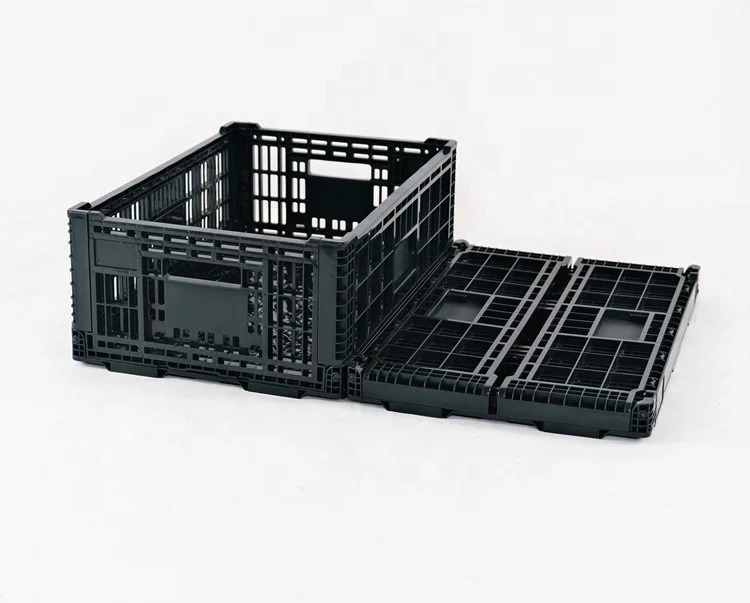
The suitability of a folding crate for space-saving storage depends on several operational factors specific to retail and distribution environments. These facilities typically experience significant variations in storage volume requirements throughout different periods, making the collapsible nature of a folding crate particularly relevant for maintaining operational flexibility. Distribution centers processing seasonal merchandise, retail operations managing fluctuating inventory levels, and facilities requiring temporary storage expansion can benefit substantially from the space-saving characteristics that a properly designed folding crate provides.
Space Efficiency and Storage Density Optimization
Collapsible Design Impact on Warehouse Layout
A folding crate fundamentally transforms how retail and distribution centers approach storage space management by reducing the footprint of empty containers by up to 75% when collapsed. This space reduction capability allows facilities to maintain larger quantities of storage containers on-site without dedicating excessive warehouse space to empty container storage. The collapsed profile of a folding crate typically measures only 25-30% of its expanded height, enabling facilities to stack significantly more units in the same vertical space allocation.
Distribution centers utilizing folding crate systems can reallocate previously unused storage areas for active inventory management rather than empty container storage. This spatial efficiency becomes particularly valuable during peak operational periods when every square foot of warehouse space contributes directly to throughput capacity. The ability to quickly deploy additional storage capacity through folding crate expansion provides operational flexibility that traditional rigid containers cannot match.
Vertical Storage Optimization Strategies
The vertical stacking characteristics of a folding crate when collapsed create opportunities for more efficient use of warehouse height restrictions. Retail distribution centers often operate under specific ceiling height limitations that constrain storage system design, making the reduced profile of collapsed folding crate units particularly advantageous. When properly engineered, a folding crate maintains structural integrity for vertical stacking while offering the space-saving benefits of collapsible design.
Storage density improvements achieved through folding crate implementation can reach 300-400% efficiency gains compared to storing equivalent quantities of rigid containers. This density improvement directly translates to reduced storage facility requirements and lower overhead costs for retail and distribution operations. The folding crate design enables facilities to maintain operational readiness while minimizing space allocation for inactive storage equipment.
Operational Suitability for Retail and Distribution Environments
Workflow Integration and Handling Efficiency
The practical application of a folding crate in retail and distribution centers depends heavily on how well the collapsible design integrates with existing material handling workflows. Most modern folding crate systems feature tool-free assembly mechanisms that allow warehouse personnel to transition between collapsed and expanded configurations within 10-15 seconds per unit. This rapid deployment capability ensures that the space-saving benefits do not create operational bottlenecks during high-volume processing periods.
Distribution centers processing diverse product categories find that a folding crate offers particular advantages for managing seasonal inventory fluctuations and temporary storage requirements. The ability to quickly scale storage capacity up or down without permanent infrastructure changes provides operational agility that proves especially valuable during peak retail seasons, promotional periods, or supply chain disruptions that require temporary storage expansion.
Durability and Load Capacity Considerations
Modern folding crate designs engineered for retail and distribution applications typically offer load capacities ranging from 30-50 kilograms while maintaining the structural integrity necessary for repeated folding and unfolding cycles. The hinged components and reinforcement structures of a quality folding crate are designed to withstand thousands of deployment cycles without compromising load-bearing capacity or dimensional stability.
Retail distribution centers handling products with varying weight distributions require storage containers that maintain consistent performance characteristics regardless of load configuration. A properly designed folding crate incorporates reinforced corners, ribbed sidewalls, and engineered base structures that distribute weight evenly while preserving the collapsible functionality that provides space-saving benefits.
Cost Effectiveness and Return on Investment Analysis
Initial Investment Versus Long-term Savings
The financial suitability of implementing folding crate systems in retail and distribution centers involves analyzing both upfront acquisition costs and long-term operational savings. While a folding crate typically commands a 20-30% price premium over equivalent rigid containers, the space-saving benefits often generate sufficient operational savings to recover the additional investment within 12-18 months of implementation.
Distribution facilities implementing folding crate systems report significant reductions in storage facility rental costs, particularly for satellite locations and overflow storage areas. The ability to maintain operational capacity with reduced physical footprint requirements translates to substantial cost savings in high-rent commercial real estate markets where warehouse space commands premium pricing.
Labor Efficiency and Operational Cost Impact
Labor productivity improvements represent another significant factor in determining the suitability of a folding crate for retail and distribution applications. The reduced space requirements for empty container storage translate to shorter travel distances for warehouse personnel, improved material flow efficiency, and reduced time spent managing storage container logistics.
Retail distribution centers utilizing folding crate systems often experience 15-25% reductions in container handling labor costs due to improved storage density and more efficient deployment of storage resources. The space-saving characteristics of a collapsed folding crate enable more efficient warehouse layout designs that minimize non-productive material handling activities and optimize workforce productivity.
Implementation Considerations and Operational Requirements
Staff Training and Deployment Protocols
Successful implementation of folding crate systems in retail and distribution centers requires establishing clear protocols for container deployment, handling, and storage management. Warehouse personnel must understand proper folding and unfolding procedures to maintain the structural integrity of the folding crate while maximizing space-saving benefits. Training programs should emphasize the importance of proper handling techniques to prevent premature wear of hinged components and maintain optimal operational performance.
Distribution centers adopting folding crate systems benefit from developing standardized procedures for container inventory management, deployment scheduling, and space allocation planning. These operational protocols ensure that the space-saving advantages of a folding crate translate into measurable improvements in warehouse efficiency and cost control.
Integration with Existing Infrastructure
The physical compatibility of a folding crate with existing warehouse infrastructure represents a crucial factor in determining implementation suitability. Retail and distribution centers must evaluate how collapsible container systems integrate with current shelving, conveyor systems, and automated handling equipment. Most modern folding crate designs maintain standard footprint dimensions that ensure compatibility with existing pallet systems and material handling equipment.
Storage rack systems and warehouse layout configurations may require minor modifications to optimize the space-saving benefits of folding crate implementation. The reduced height profile of collapsed containers enables more efficient utilization of vertical storage space, but facilities must ensure adequate clearance for container deployment and handling operations.
FAQ
How much space can a folding crate save compared to traditional rigid containers?
A folding crate typically reduces storage space requirements by 70-75% when collapsed compared to rigid containers of equivalent capacity. This space reduction translates to storing 3-4 times more empty containers in the same area, significantly improving warehouse storage density and reducing facility footprint requirements for container management.
What is the typical lifespan of a folding crate in high-volume distribution environments?
Quality folding crate systems designed for commercial use typically provide 3-5 years of reliable service in high-volume retail and distribution applications. The lifespan depends on usage frequency, load characteristics, and proper handling procedures, with well-maintained units often exceeding 10,000 fold-and-unfold cycles while maintaining structural integrity and load capacity.
Are there weight capacity limitations that make folding crates unsuitable for certain retail products?
Modern folding crate designs typically support load capacities of 30-50 kilograms, making them suitable for most retail and distribution applications. However, very heavy items like automotive parts, large appliances, or bulk industrial materials may require rigid container solutions due to weight distribution and load concentration factors that exceed folding crate design parameters.
How do folding crates perform in temperature-controlled retail and distribution environments?
Most commercial-grade folding crate systems maintain structural integrity and functionality across temperature ranges from -20°C to +60°C, making them suitable for refrigerated distribution centers and temperature-controlled retail storage applications. The hinged mechanisms and plastic materials used in quality folding crates are engineered to withstand thermal cycling without compromising collapsible functionality or load-bearing capacity.
Table of Contents
- Space Efficiency and Storage Density Optimization
- Operational Suitability for Retail and Distribution Environments
- Cost Effectiveness and Return on Investment Analysis
- Implementation Considerations and Operational Requirements
-
FAQ
- How much space can a folding crate save compared to traditional rigid containers?
- What is the typical lifespan of a folding crate in high-volume distribution environments?
- Are there weight capacity limitations that make folding crates unsuitable for certain retail products?
- How do folding crates perform in temperature-controlled retail and distribution environments?